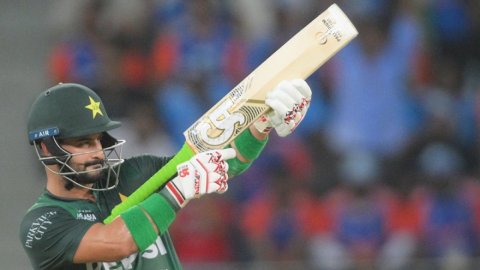
Asia Cup T20: Cricket has been described as a gentleman’s game where grace, patience, and fair play come together to create a spectacle for the masses. Like any sport, its traditions have long dissuaded political sloganeering or any form of disposition to violence. Yet, when Pakistani batter Sahibzada Farhan mimicked firing an AK-47 rifle with his bat during a recent Asia Cup T20 match against India, it was a moment of dragging this celebrated sport into a darker terrain.
Though India won the game fairly and squarely, as has been become an established norm now, and reinforce its dominance in the subcontinental rivalry, Farhan’s transgression and gesture eclipsed the cricket sport in itself. The image of a Pakistani cricketer enacting a Kalashnikov firing on the field became symbolic of something far larger, which is the militarised, radicalised psyche of a nation where violence is not seen as aberrant but as cultural expression.

This was not just a tasteless celebration. It was an act that revealed how, in Pakistan, the language of jihadist symbolism, perpetuated by military establishment since 1980s during Ziaul Haq’s regime, has permeated every level of society from politicians to artists, doctors, and even sportsmen.